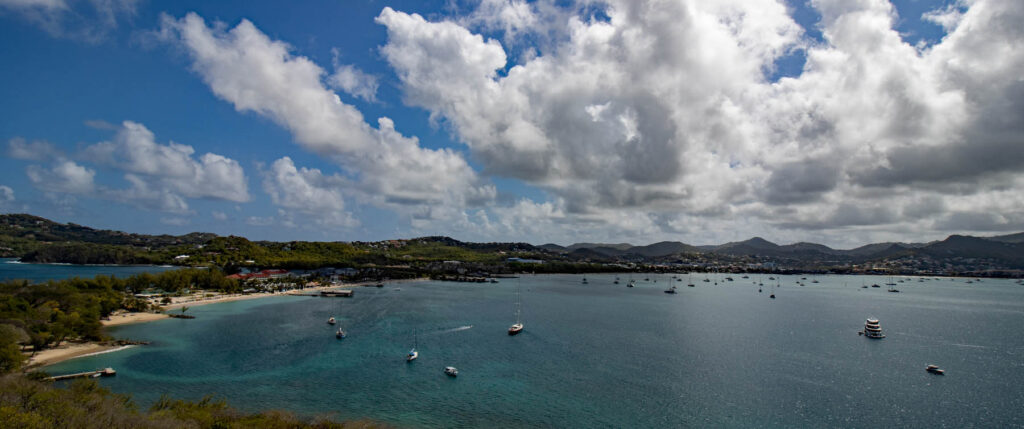
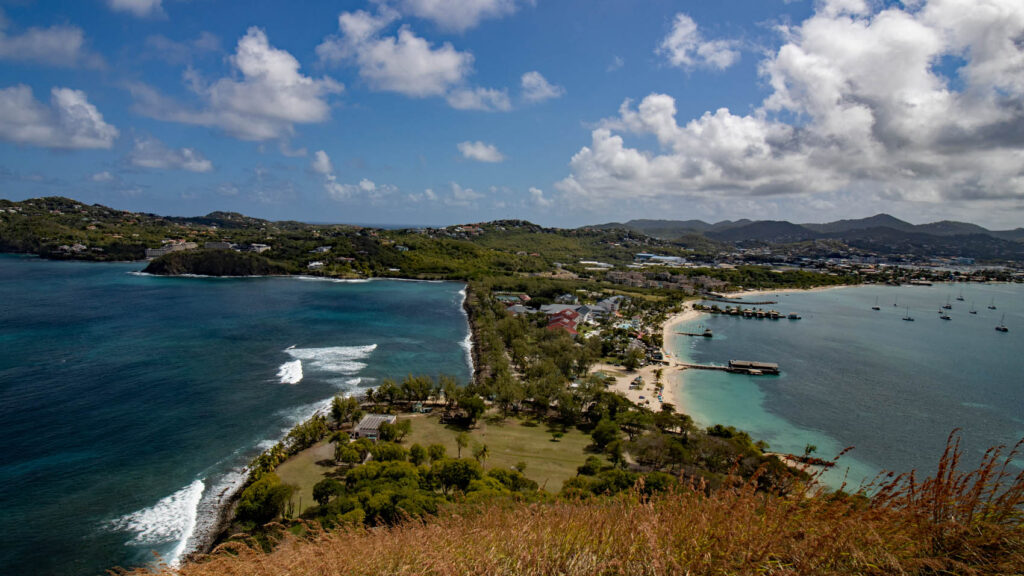
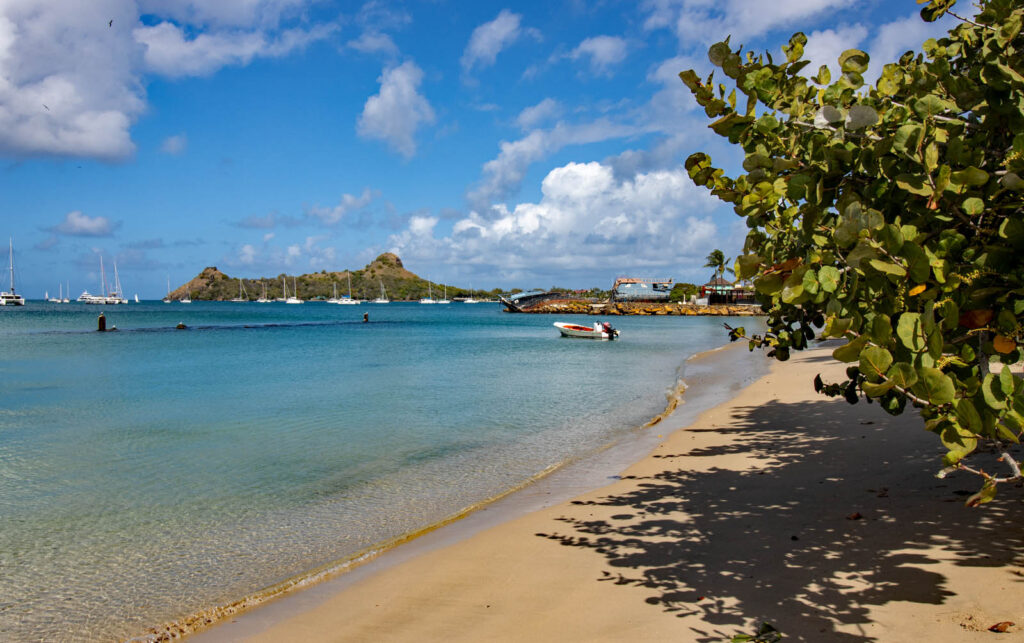
At the end of January we made the long passage north from Bequia, bypassing Saint Vincent to arrive at Rodney Bay, Saint Lucia just before sunset. We arrived expecting the new chart plotter we had ordered from America to have also arrived. That was not to be, so we spent over a week in the marina, each day tracking the plotter’s slow route to us via Tennessee and Puerto Rico. This gave us a chance for more exploration, including a visit to the fort on Pigeon Island established by Admiral Rodney to fend off the pesky French in nearby Martinique. There were also numerous locals offering their labour so we departed with shiny hull and topsides, gleaming stainless steel, full repairs to the deck caulking and re-sealed port lights. Fortunately the chart plotter proved easy to install so we were able to depart the next morning to Martinique.
We spent a few days in Martinique mainly shopping and dodging deluges of rain. At least the port lights definitely no longer leak. Sadly the new chart plotter no longer links to our VHF radio so we went in search of a fix, to no avail. We did manage to upgrade our heads with replacement showers but were unable to source parts to fix our water tank gauge. Happily the search for provisions of delicious cheese and wine was much more successful so we headed north to Dominica.
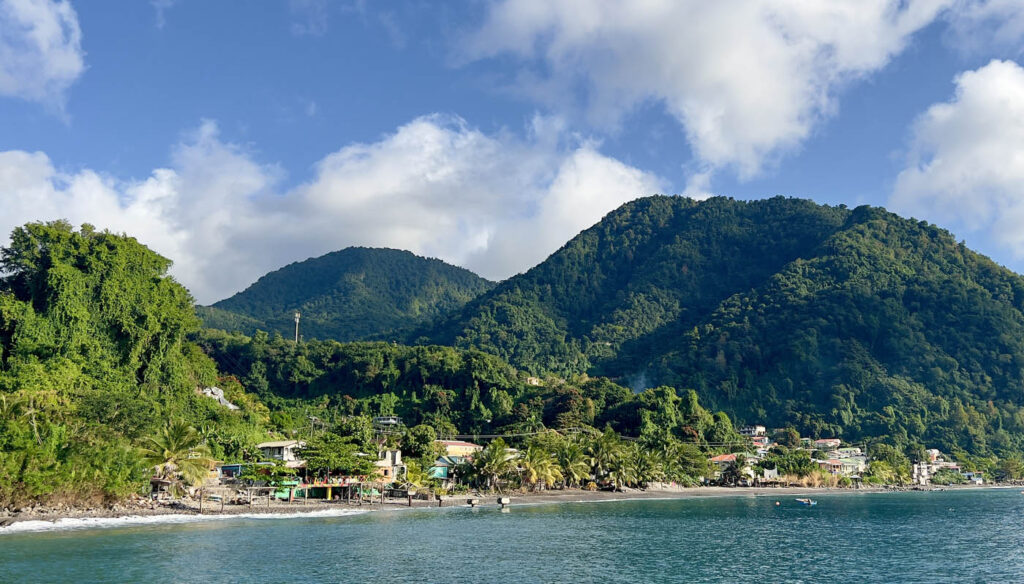
Dominica is stunning, mountainous, lush, unspoilt and known as the Nature island. It is gradually becoming more touristy and a number of sites were used for filming Pirates of the Caribbean. Our first port of call was the capital, Roseau, in the south west. We moored in the bay and asked the main man, SeaCat, to help us organise excursions.
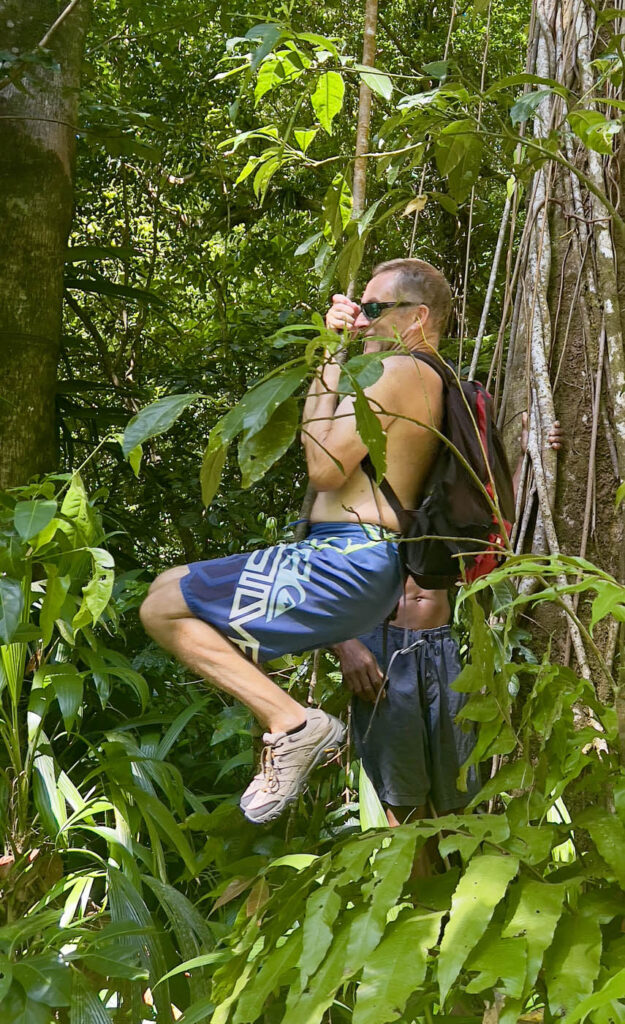
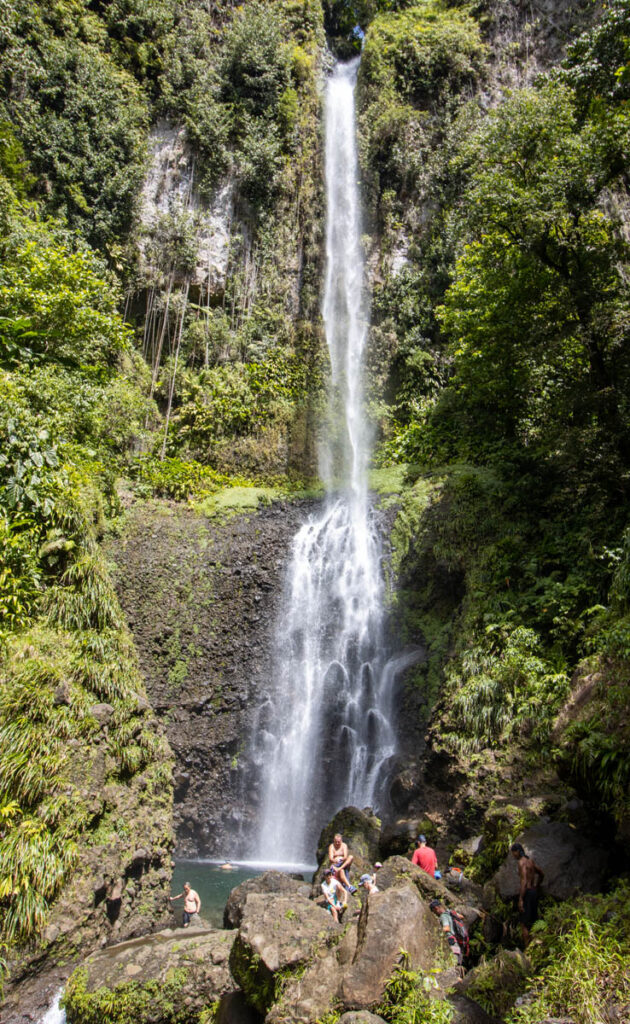
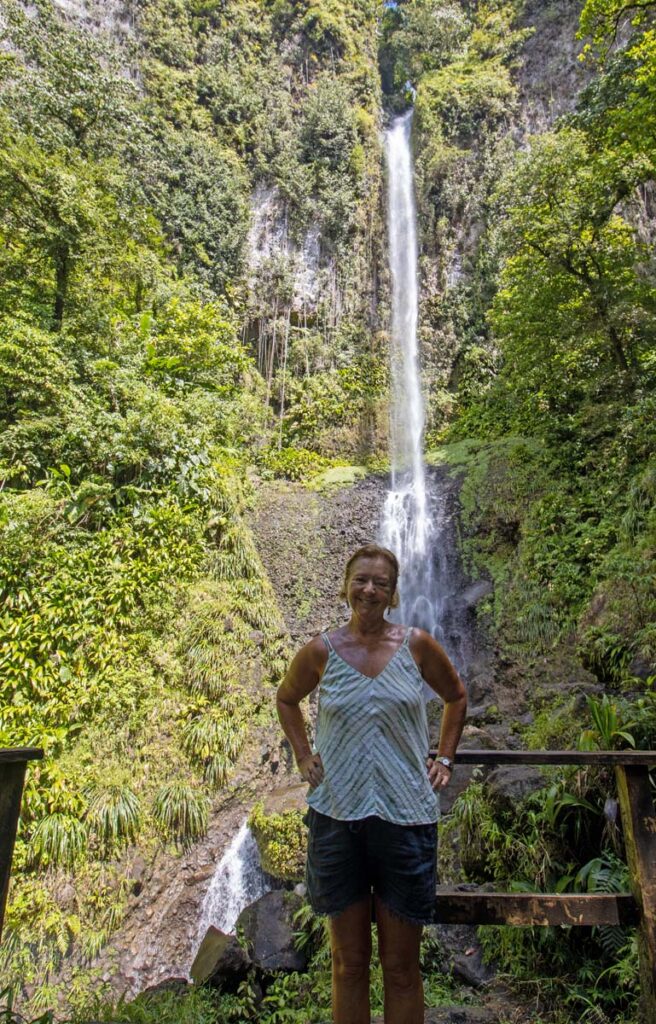
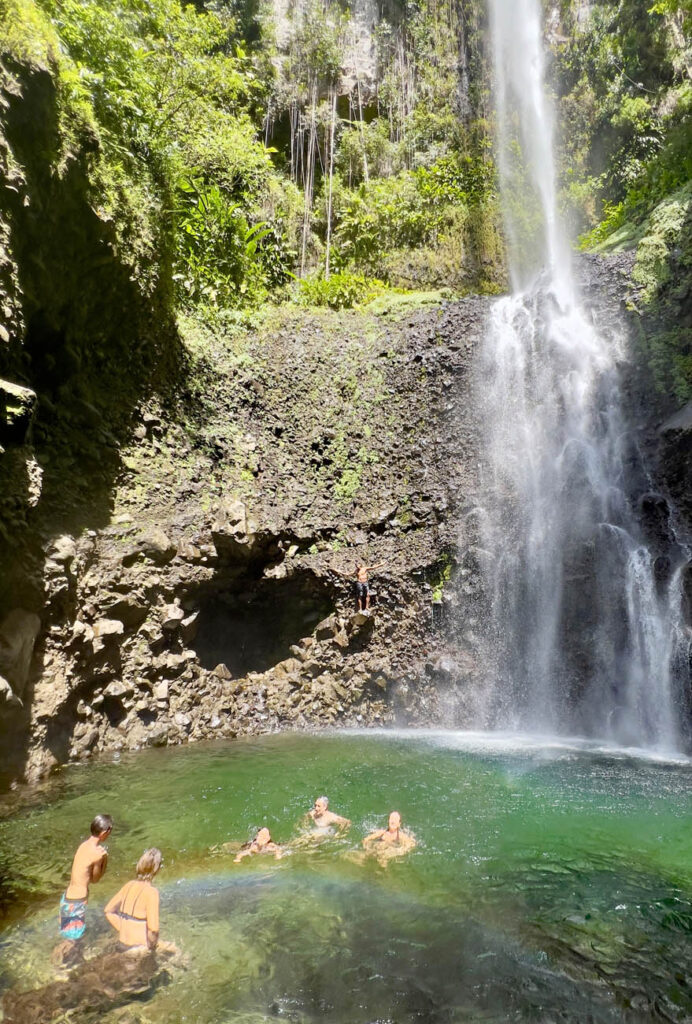
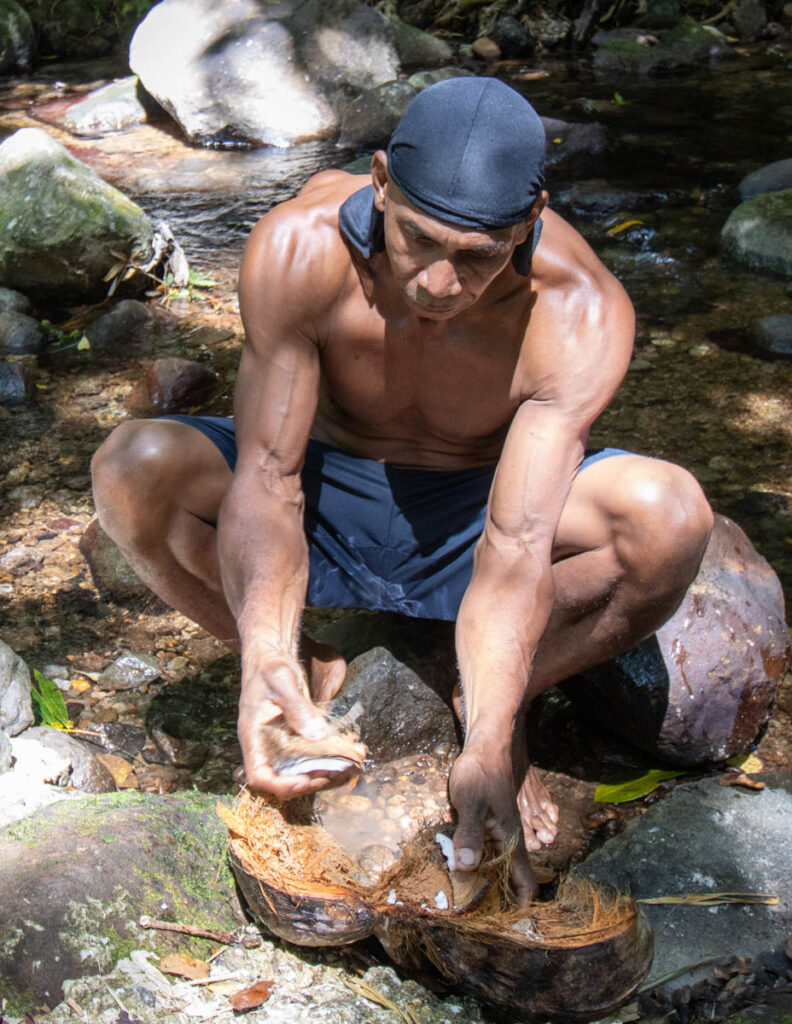
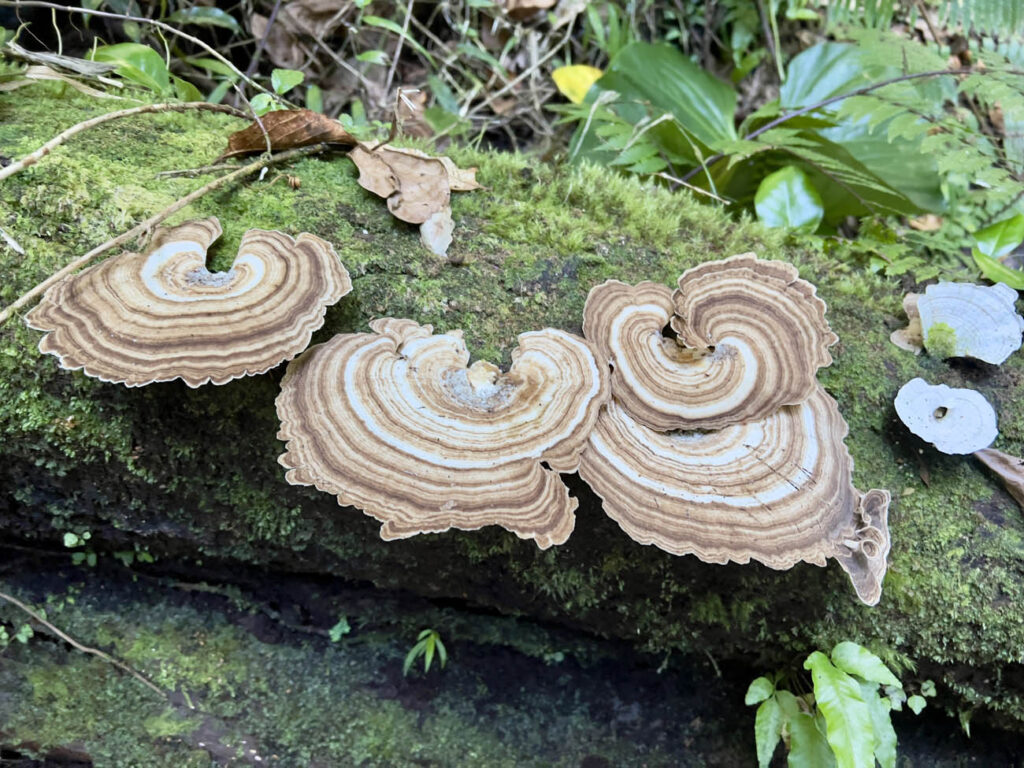
Our first trek through the rain forest took us to the beautiful Middleham Waterfall. Our guide Mervin ‘the Ninja’ described all the flora and even found a liana for Jonathan to play Tarzan. After a sweaty climb it was wonderful to be able to leap into the ‘refreshing’ pool at the base of the falls.
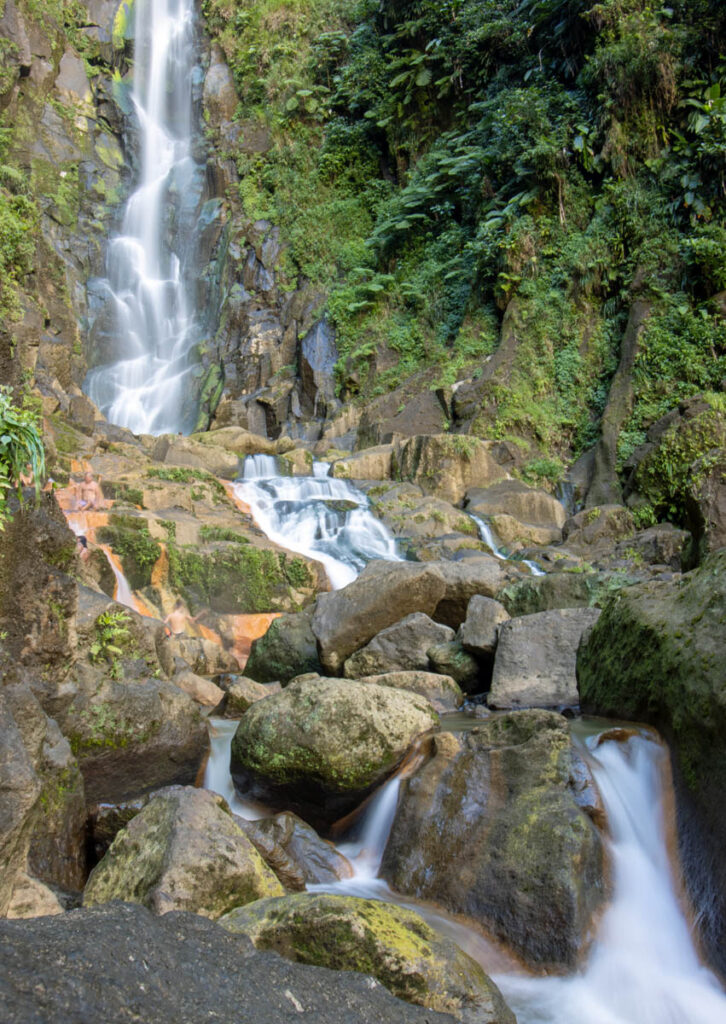
There were plenty more swimming opportunities during the day. We visited Trafalagar falls where a hot spring mixes with the cold waterfall so you can lie in a pool with one side hot and the other cold – very strange. Our final swim was in the Titou gorge, a dark, deep gorge where you swim up current for a hundred metres to reach a pool shaped by a massive waterfall plunging from above. Dive under if you dare, it was like being in a washing machine!
Next day was our trip to the Boiling Lake, recommended by friends who sailed the Caribbean several years ago. They warned us that the walk would be tough, as has every islander we’ve met since we arrived.
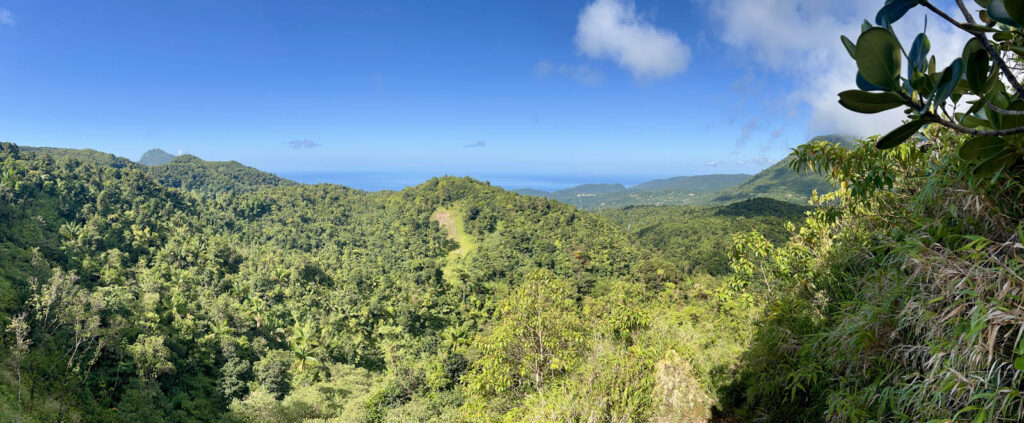
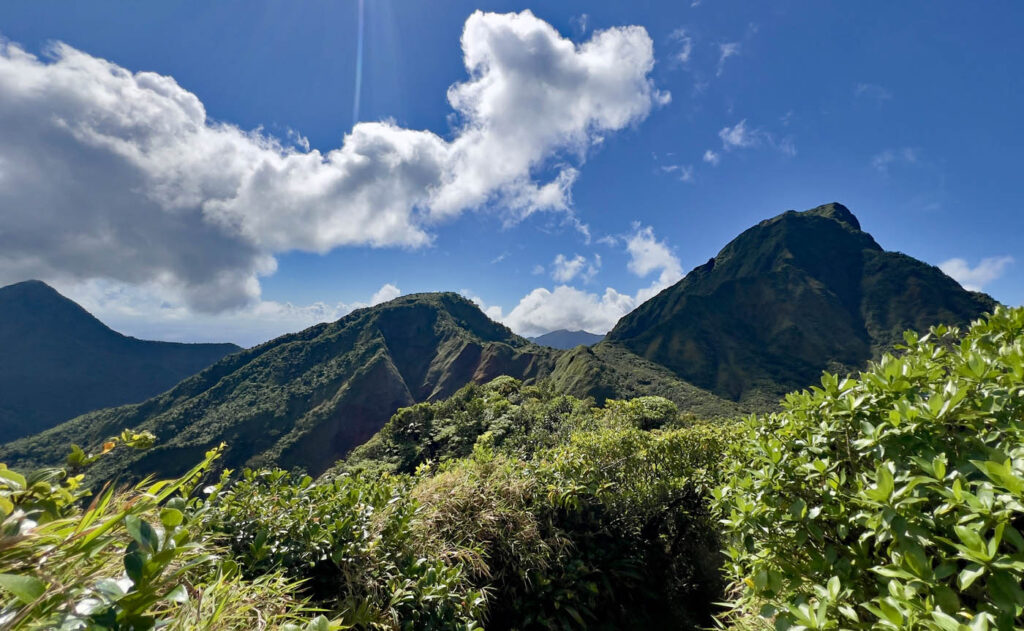
The initial ascent is from the Titou Gorge, through the rain forest where the path gradually takes on a strong smell of sulphur. At times you emerge to spectacular views over the forests and pitons towards the Caribbean Sea.
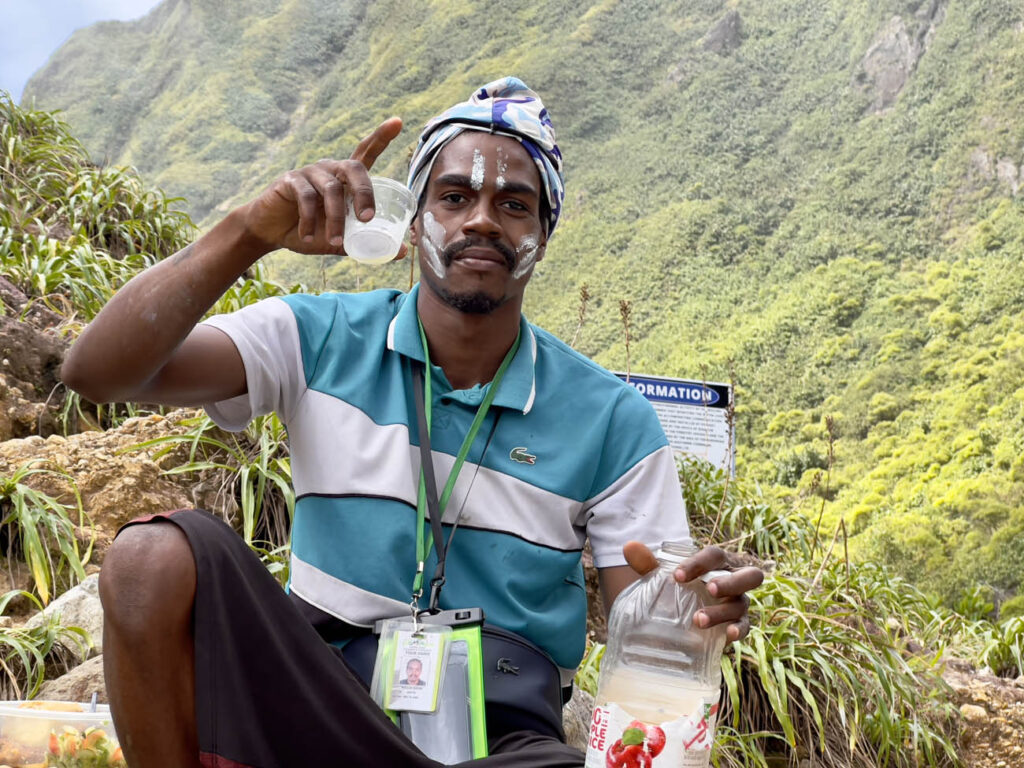
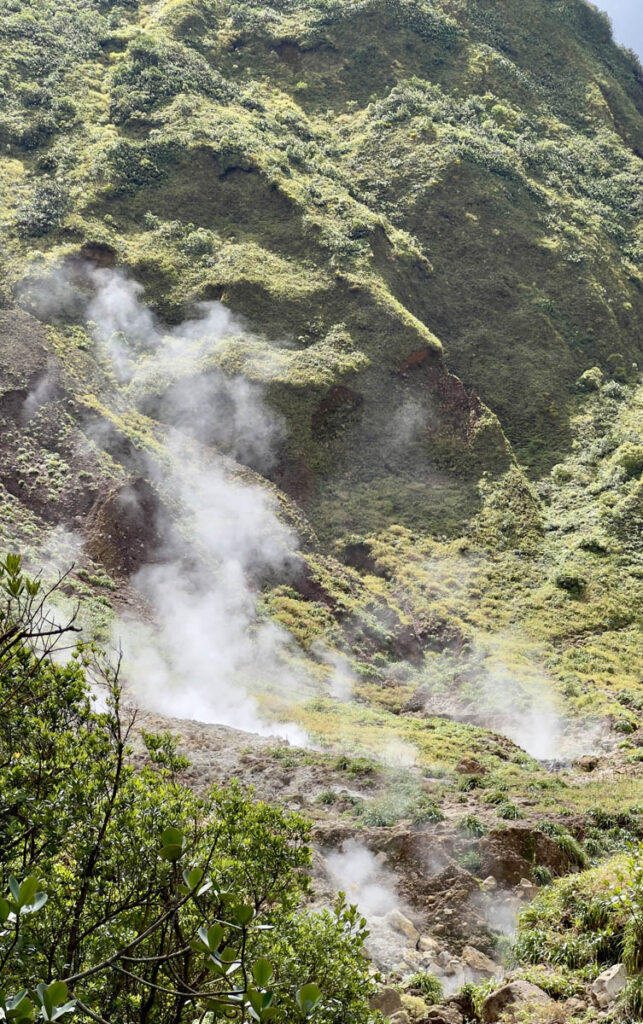
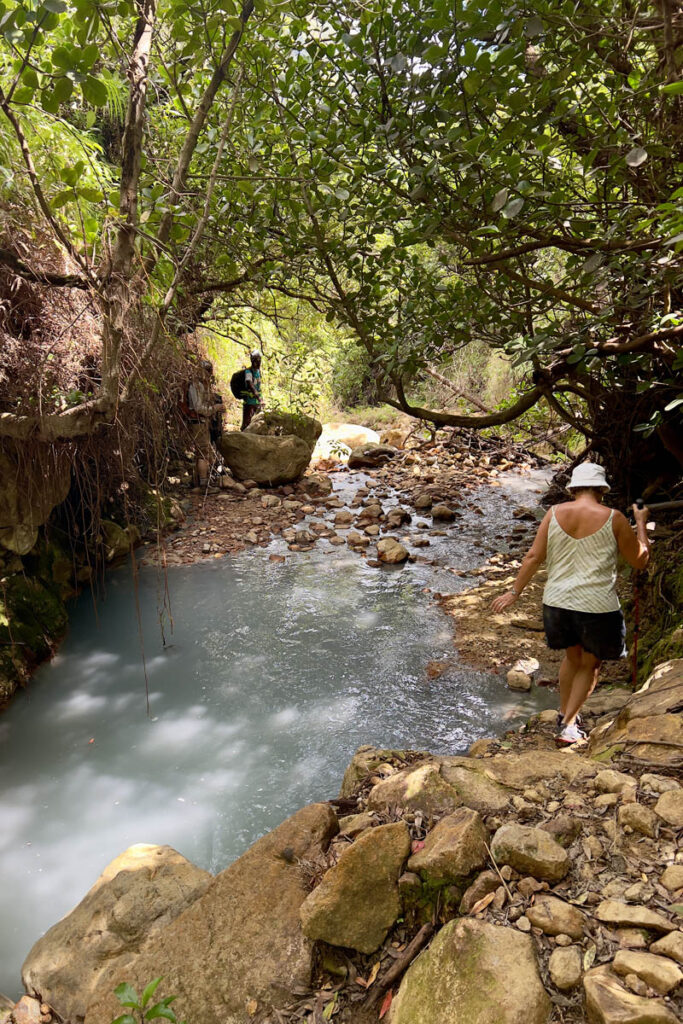
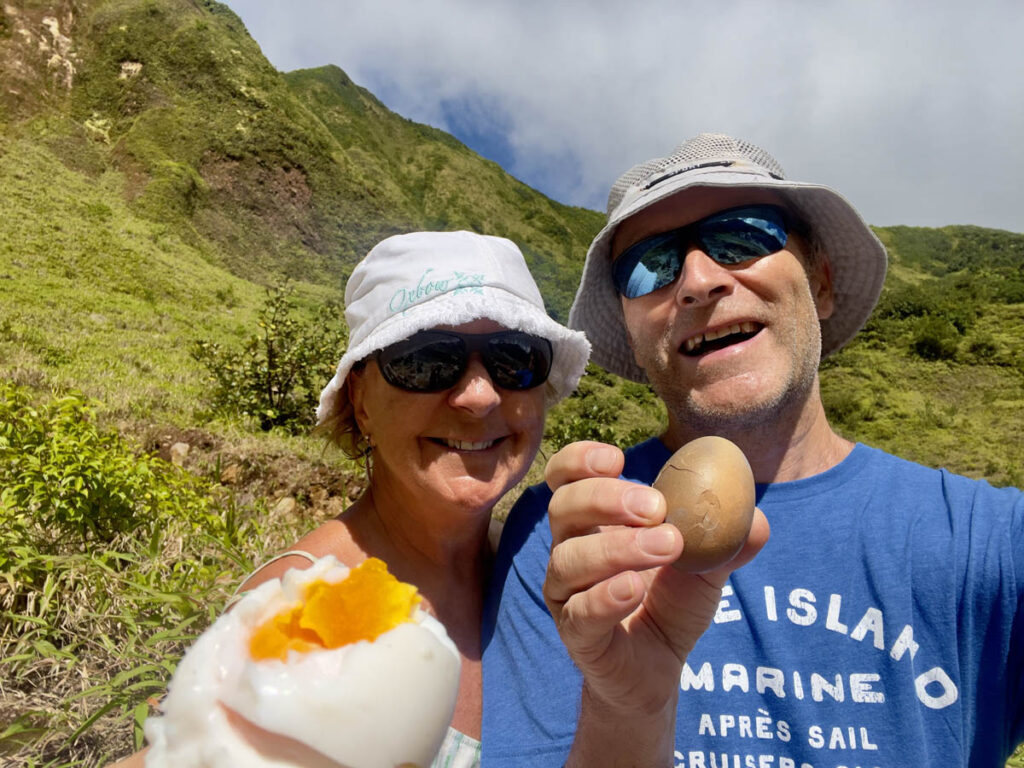
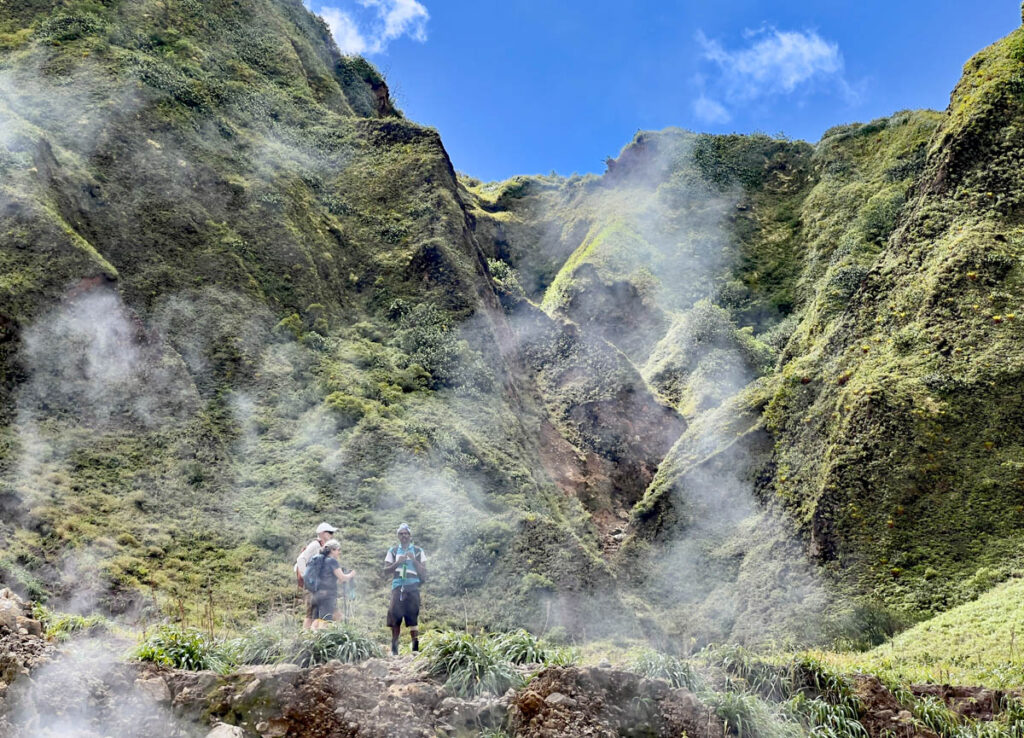
The initial hour of walking, although steeply uphill on wooden steps, seemed very straightforward so we wondered what all the fuss was about. But our guide Kellis proved to be invaluable on the second part of the walk. We had a steep, scrambling descent through a canyon of slippery mud and rocks to reach Desolation Valley. Here the smell of sulphur was really strong, with steam emerging between the rocks and streams of hot water all around. Kellis boiled eggs in the 80 degree water, an excellent snack to fortify us for more scrambling and climbing to the Boiling Lake.
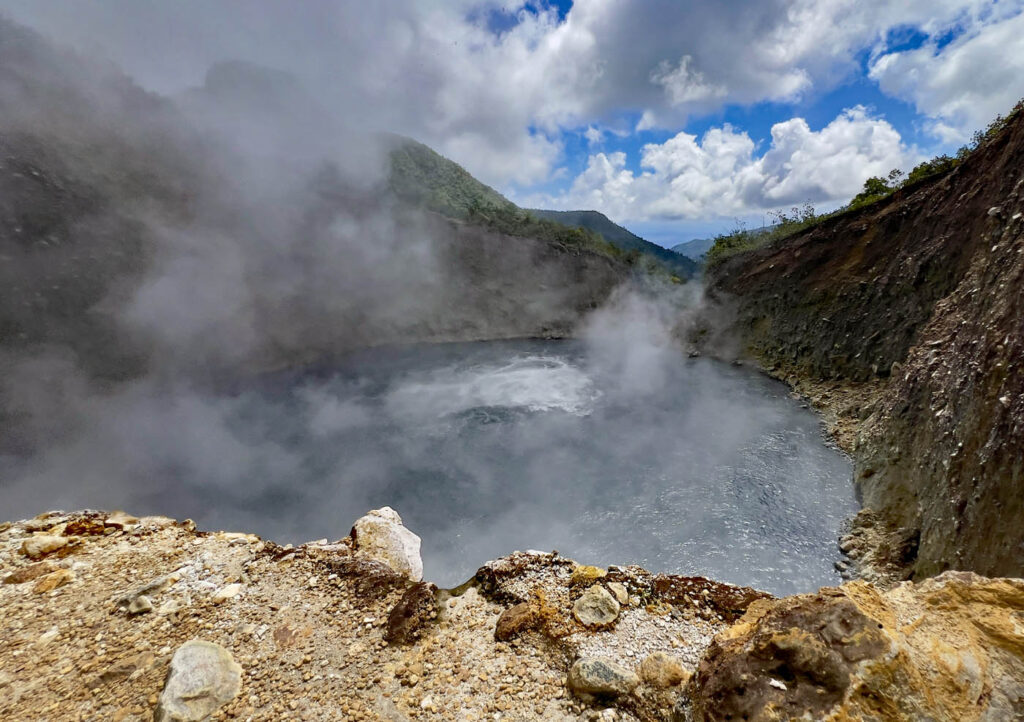
Finally, after about four hours, we arrived at a plateau beyond which was a cloud of steam. This cleared intermittently to reveal, below us, a lake of water, boiling as though in a cauldron. It is one of only two such phenomena in the world and spectacular to see. Needless to say, we didn’t get too close to the cliff edge.
Jonathan made a short video of our trek to the ‘Boiling Lake’. Hopefully it captures the magnificence of the volcanic landscape.